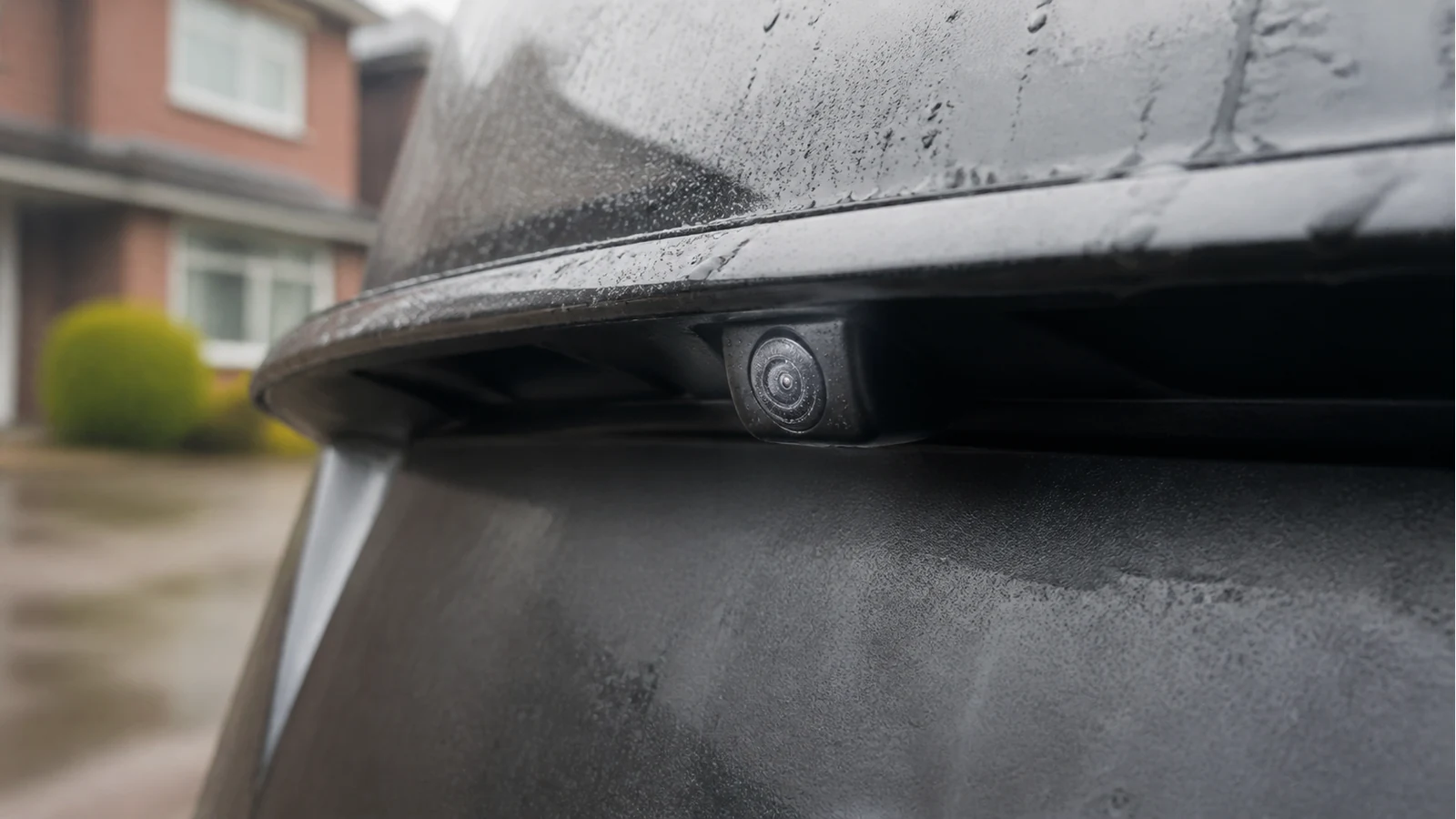
Fogged Reversing Camera Replacement Uk
Direct answer: if a reversing camera looks fogged on the outside, clean the lens first. If the mist sits behind the lens or returns after the car has dried, treat it as water ingress and check the housing, seal and connector before deciding whether to reseal or replace the module.
Cleanable fog or water inside the camera?
Start with the simplest separation: surface dirt moves when you wipe it; internal condensation does not. UK owners regularly describe rear camera housings that mist internally after wet weather, washing or age-related seal failure, including discussions of fogged units on Evoque Owners Club and water-damaged reverse cameras on Kuga Owners Club. Those reports are useful because they show the same decision pattern: do not assume the screen is faulty until the camera body and connector have been inspected.
Decision ladder
- Wipe the lens with a clean microfibre cloth and check the image again in reverse.
- Look for droplets or haze behind the lens. Internal haze means cleaning the outside will not solve the cause.
- Inspect the camera housing and gasket for cracks, gaps or trapped moisture.
- Unplug only when safe to do so, then check the connector for corrosion or trapped water.
- Dry-test the camera before refitting trim. If the picture returns briefly and then fogs again, the seal is still suspect.
When resealing makes sense
A careful dry-and-reseal attempt can make sense when the camera is otherwise working, the housing is accessible and the board is not visibly corroded. General UK Q&A guidance such as Gumtree's foggy reversing camera answer treats drying and resealing as a possible repair route, but not as a guaranteed permanent fix.
When replacement is the cleaner answer
Replace the module when the lens remains cloudy inside, the housing is cracked, the plug is green with corrosion, or the image is already intermittent. For a factory-style system, replacement should still be boring: match the full part number, housing, connector and pin count before ordering. If you are working on a 23390515-style failed module and those checks match, compare the like-for-like replacement route after the diagnosis is complete.
Stop points
Do not DIY reseal an ADAS-linked surround camera, a warranty-covered car, or a unit with obvious circuit-board corrosion. At that point the risk is no longer just a misty picture; it is misdiagnosis and repeated trim removal.
FAQ
Will silicone fix it permanently? Only if the seal gap is the real fault and the camera electronics are still sound. Silicone cannot reverse internal corrosion.
Does a like-for-like camera always avoid coding? No universal promise is sensible. On many factory-style swaps the goal is to preserve the original screen path, but the exact vehicle and part identity still decide the risk.